Deep Cleaning & Reblooming in Austin
Remove embedded bacteria, pet dander, and Central Texas limestone dust — plus power-brush flattened fibers back to life. Reblooming included in every deep clean.
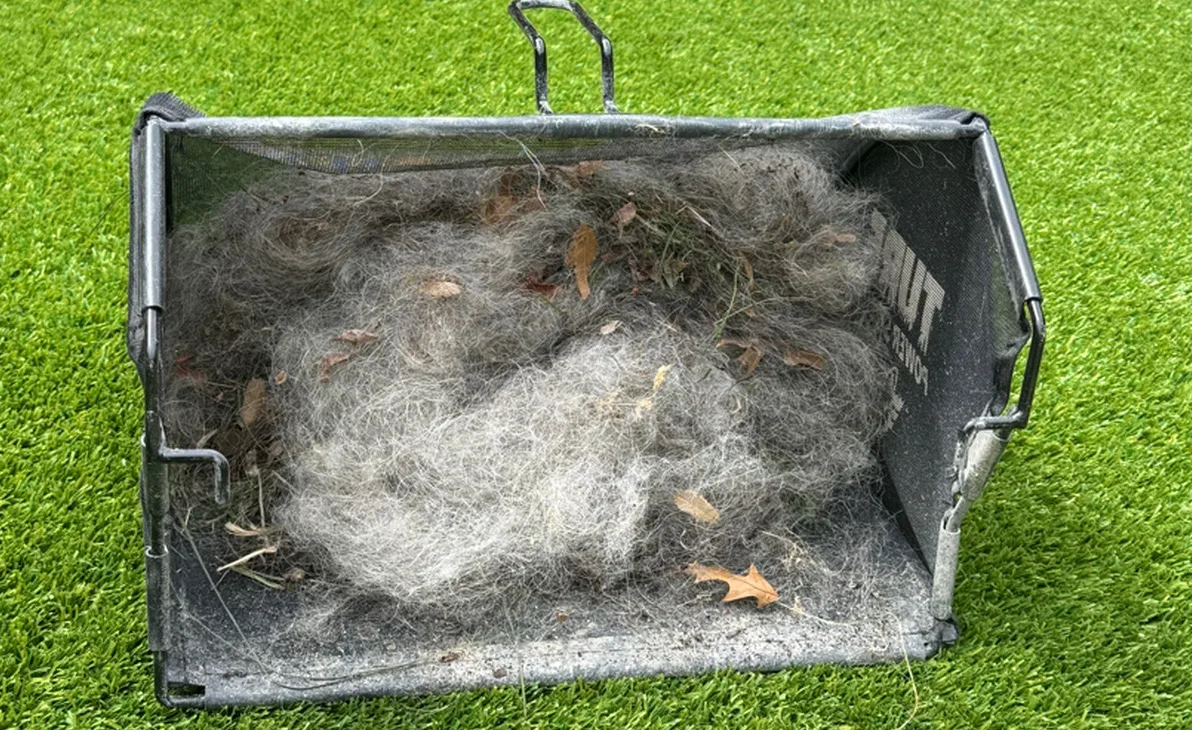
If you have artificial turf in the Austin area, it's collecting things you probably can't see. Central Texas limestone dust — the reddish-brown particulate from Travis County's distinctive soil — settles into infill layers with every dry summer wind. Live oak and cedar pollen blanket every outdoor surface for three solid months each spring. Organic debris from the violent spring storms that roll through the Greater Austin area washes into drainage layers. And through all of it, bacteria colonize the warm, occasionally moist environment created by the combination of Texas humidity and summer heat that regularly pushes turf surface temperatures past 140°F.
Most turf owners rinse occasionally and leave it at that. We don't say that to criticize — it's just not something anyone told you when you made your investment. But what a garden hose can reach is only the top inch or two of a turf system that's 3–4 inches deep. The infill layer — the granular material between the synthetic blades — is where the real contamination lives, and it's completely untouched by surface rinsing.
Tejas Turf Cleaning is an Austin-based, locally owned operation that built its process around Central Texas synthetic lawns. We use a suctioning turf sweep and biodegradable, oxygen-powered cleaning products; kids and pets can return after the turf dries. We serve residential homeowners, commercial properties, dog facilities, HOA communities, and athletic venues across Greater Austin. Get a free quote today.
What Is Artificial Turf Deep Cleaning?
The phrase "deep cleaning" gets used loosely, so let's be precise about our turf process. We clear surface debris, brush fibers, use a suctioning turf sweep to pick up loosened debris, and apply oxygen-powered treatment where needed. We do not use a carpet extractor to pull liquid from the backing or infill.
What accumulates in a Central Texas turf's infill layer over time is genuinely surprising. Travis County limestone dust particles — extremely fine caliche limestone — become airborne in the dry-heat months and settle into the infill, where they bind to synthetic fibers electrostatically and compact over months into a dense, drainage-impeding layer. Spring pollen from live oak, mountain cedar, and ragweed — and Central Texas produces some of the highest pollen loads in the country — deposits in the infill in visible quantities during peak season. Organic matter from leaves, grass clippings blown from neighboring yards, insect activity, and pet use decomposes in the infill, feeding bacterial colonies.
Austin's climate accelerates debris and odor buildup. The city averages over 230 sunny days per year and experiences 90°F+ temperatures for 120 days annually. Regular debris removal and targeted treatment help prevent surface buildup between cleanings.
None of this is cosmetic. The bacteria that colonize dirty infill include E. coli, Staphylococcus, and various mold species. Children playing on that surface come into direct contact with it. Pets lie on it. It's a hygiene issue, a health issue, and left unaddressed long enough, it becomes a turf replacement issue.
Our Deep Cleaning & Reblooming Process
We developed our process specifically for Central Texas conditions. Every step exists for a reason.
We begin with a thorough initial inspection — walking the full turf perimeter and interior, assessing infill levels, checking drainage, identifying matted zones, stain concentrations, and odor hotspots. Before any water or product touches your turf, we know exactly what we're working with and where the problem areas are.
Debris removal comes next. We clear surface-level leaves, twigs, pet waste, and loose organic matter using specialized turf blowers and manual tools calibrated for synthetic grass — never metal rakes that can damage fibers or create infill displacement patterns.
Then comes the step most DIY approaches skip entirely: power brushing to lift compacted fibers and expose embedded debris. Our rotary power brushes use synthetic-safe bristles at specific angles that lift the blade tips and begin decompacting the infill surface, creating pathways for cleaning products to penetrate.
Infill decompaction follows — a targeted process using specialized tooling to loosen the infill layer itself. In heavily contaminated or long-neglected turf, this step can take significant time as packed infill material that's been compressing for months or years is gradually freed.
With the infill loosened, we apply our oxygen-powered sanitization treatment — a non-toxic, biodegradable solution that breaks down bacteria, organic compounds, and odor molecules at the molecular level. We're very specific about what we use: no bleach, no ammonia, no harsh chemical disinfectants that degrade synthetic fibers, no fragrances that mask rather than eliminate odor. The solution works through oxidation, breaking organic contamination down into little more than water and oxygen.
We then allow appropriate dwell time — typically 15–30 minutes — for the solution to do its work. This is a non-negotiable part of the process. Rushing this step significantly reduces effectiveness.
We use a suctioning turf sweep to pick up loosened surface debris, then groom the fibers and assess areas needing additional attention. This is a turf sweep, not a carpet extractor or an industrial deep-extraction system.
We follow the sweep with a careful rinse where appropriate, checking how the turf drains as we go.
Infill redistribution comes next, leveling any infill that has migrated during the cleaning process and ensuring consistent depth across the turf surface. Uneven infill creates drainage problems, comfort issues, and accelerated matting.
We finish with final grooming — power brushing fibers upright for that freshly-installed appearance — and a complete quality inspection and drainage check. We walk the finished turf with you before we leave.
Why Professional Deep Cleaning Matters for Your Turf
It eliminates up to 99% of bacteria and pathogens from the turf surface and infill. Not reduces — eliminates. Our oxygenated cleaning process combined with anti-microbial finishing spray creates a genuinely sanitary surface, not a surface that smells clean because a fragrance product was applied. For families with young children and pets, this matters profoundly.
It restores proper drainage. Compacted infill and embedded debris block the drainage perforations in the turf backing. This causes water pooling after Austin's heavy spring storms — storms that can drop 2–4 inches in a single event. Deep cleaning clears drainage pathways and can restore turf that's been pooling to proper function without any structural modification.
It extends your turf's lifespan by years. Artificial turf installations in Greater Austin represent a significant investment. Regular deep cleaning prevents infill compaction and the fiber degradation it causes. Well-maintained turf routinely reaches 15–20 years of service life. Neglected turf in Central Texas conditions often shows significant degradation in 7–10 years, requiring expensive partial or complete replacement.
It dramatically improves appearance. The dull, grayish-brown cast that accumulates on synthetic turf over time isn't inherent to the material — it's limestone dust, organic matter, and compacted debris coating the fiber surfaces. After deep cleaning, the turf's original color and texture is restored. Clients consistently describe the result as "looks like it was just installed."
It creates a genuinely safer play surface. Austin neighborhoods like Mira Vista, Tanglewood, and South Austin have significant concentrations of families with young children using synthetic turf as play surfaces. A visually clean turf and a bacterially clean turf are not the same thing. Professional sanitization creates the surface those children should be playing on.
It protects your investment. The single most effective way to maximize the return on your turf installation is regular professional maintenance. The math is clear: quarterly professional cleaning can add 5–8 years of useful life to a turf installation that might otherwise need replacement at 10 years instead of 18.
Who Needs Artificial Turf Deep Cleaning in Austin?
Homeowners with pets are our most frequent clients. Dog runs and backyard pet areas in Austin neighborhoods like Tarrytown, Allandale, Westlake, and South Austin — areas known for large properties and dog-friendly households — accumulate contamination at the fastest rates. If you have one dog, quarterly deep cleaning is our baseline recommendation. Two or more dogs, or large breeds with heavy use of the turf, warrant monthly professional service.
Families with children — particularly in communities in the Eanes ISD and Round Rock ISD zones where front-yard and backyard turf play areas are common — need regular sanitization to maintain a surface genuinely safe for kids who are touching, sitting, and rolling on the turf surface. An annual schedule is a reasonable minimum; semi-annual is better for active households.
HOA communities with common areas, dog parks, and entryway turf features are subject to heavy shared use and, in many cases, maintenance compliance requirements. Master-planned communities throughout the Austin area have increasing numbers of synthetic turf installations in common areas that require professional quarterly maintenance to stay presentable and sanitary.
Commercial properties along Austin's growing commercial corridors — South Congress, The Domain, East 6th, Mueller — with office courtyard turf, restaurant patio synthetic grass, and retail frontage installations need quarterly or monthly deep cleaning depending on foot traffic volume. Commercial installations see exponentially more use per square foot than residential yards.
Doggy daycares and kennels represent the highest-concentration, highest-frequency use case for professional deep cleaning. A facility with 30–50 dogs using synthetic turf daily needs monthly professional service as an absolute minimum to maintain sanitary conditions and avoid odor complaints from clients and neighbors.
How Much Does Artificial Turf Deep Cleaning Cost in Austin?
Our deep cleaning and sanitization service starts at $339. Every yard is different, so we quote each job individually based on turf size, condition, and any add-on services (like pet odor treatment or infill replenishment). Reblooming is included in every deep clean at no extra charge. Commercial properties are quoted based on square footage, access requirements, and service frequency.
Recurring maintenance plans — quarterly or monthly — offer per-visit savings compared to one-time pricing. Most Austin homeowners find that a quarterly maintenance plan pays for itself in turf lifespan extension within the first year. Visit our pricing page to request a free quote based on your specific turf size and needs.
We offer free on-site assessments for any property where the scope isn't clear from basic information. For commercial properties with complex access or large square footage, the assessment is the only way to provide an accurate quote. Contact us to schedule.
How Often Should You Deep Clean Your Artificial Turf?
The honest answer depends on your specific situation, but general guidelines: residential turf without pets should receive deep cleaning at minimum twice per year — ideally in late spring after pollen season peaks and in early fall before the decomposition season from leaf drop begins. Residential turf with pets warrants quarterly deep cleaning, with targeted odor treatment between visits if needed. Commercial properties and dog facilities should plan for monthly service.
Austin-specific factors that push frequency higher: February through May is the most intense pollen season in Central Texas, and turf that isn't cleaned in May enters summer already carrying a significant pollen load that the heat will bake in further. The summer months from June through September accelerate bacterial growth and uric acid crystallization. Fall brings leaf litter from Austin's mature urban tree canopy. And Central Texas's severe weather season — roughly April through October — generates organic storm debris that settles into turf after heavy events.
Our maintenance plan clients receive automated scheduling reminders and priority booking, ensuring they never miss the optimal timing for their service visits.
Frequently Asked Questions About Turf Deep Cleaning
Is your deep cleaning process safe for pets and children? Yes — completely. We use only non-toxic, biodegradable, oxygen-powered products with no harsh chemicals, bleach, or formaldehyde. Your family and pets can return to the turf immediately after the cleaning is complete and the surface has dried, which typically takes 20–30 minutes on a warm Austin day. We'd never use anything we wouldn't feel comfortable with our own dogs walking on.
How long does a deep cleaning take? Most residential properties (500–1,000 sq ft) take 1.5–2.5 hours for a standard deep cleaning. Larger yards, heavily contaminated turf, or properties receiving their first professional cleaning after years of surface-only maintenance can take 3–5 hours. We give you a time estimate when we schedule, and we always call 30 minutes before arrival.
Will deep cleaning damage my turf? No. Our entire process is specifically designed for synthetic turf. We never use pressure washers — which can damage fiber backing and displace infill unevenly — harsh chemical solvents, or abrasive tools that can fray fibers. We adjust bristle pressure and brush speed based on your specific turf type and fiber condition.
Do you clean all types of artificial turf? Yes. We service polyethylene, polypropylene, and nylon turf from all major manufacturers — FieldTurf, SYNLawn, TigerTurf, Greenfield, and others. Our equipment is calibrated differently for different fiber types, and we assess turf type during our initial inspection.
Can you clean turf installed by another company? Absolutely. The majority of our clients have turf installed by a variety of contractors, landscapers, and installers across the Greater Austin. Who installed it doesn't affect how we clean it.
What's the difference between deep cleaning and regular maintenance? Our professional clean includes a suctioning turf sweep, brushing, oxygenated treatment, and fiber grooming. Regular maintenance — rinsing, debris removal, surface grooming — is what you do between professional visits. Both help keep your turf looking its best.
Schedule Your Deep Cleaning Today
Austin's turf maintenance season runs year-round — our climate never gives the infill a true winter break. Whatever condition your turf is in today, we can restore it. We serve Austin, Arlington, Southlake, Keller, and 26 more Austin-area communities. Use our online quote form to get your free estimate today.
Service Overview
Deep cleans start at $339
Includes:
- Oxygenated pre-treatment
- Power brushing & reblooming
- Suctioning turf sweep
- Anti-microbial spray
- Full fiber cleaning & grooming
Our technicians follow standards set by the Synthetic Turf Council — the industry's leading authority on synthetic turf care.
Deep Cleaning & Reblooming Near You
We serve all of Greater Austin and the Hill Country. Click your city for local pricing and availability.
Other Services You May Need
Most Austin homeowners pair deep cleaning & reblooming with one of these — bundle and save with our recurring plans.
Neutralize stubborn pet urine odors amplified by the Texas heat with our oxygen-powered treatment process.
Restore displaced infill to maintain proper drainage, cushioning, and fiber support — critical after Central Texas storm seasons.
Patch burns, re-seam separations, fix pet-damaged spots, and restore storm-torn or sun-warped artificial turf back to a seamless, like-new surface.