Turf Repair & Restoration in Austin
Patch burns, re-seam separations, fix pet-damaged spots, and restore storm-torn or sun-warped artificial turf back to a seamless, like-new surface.
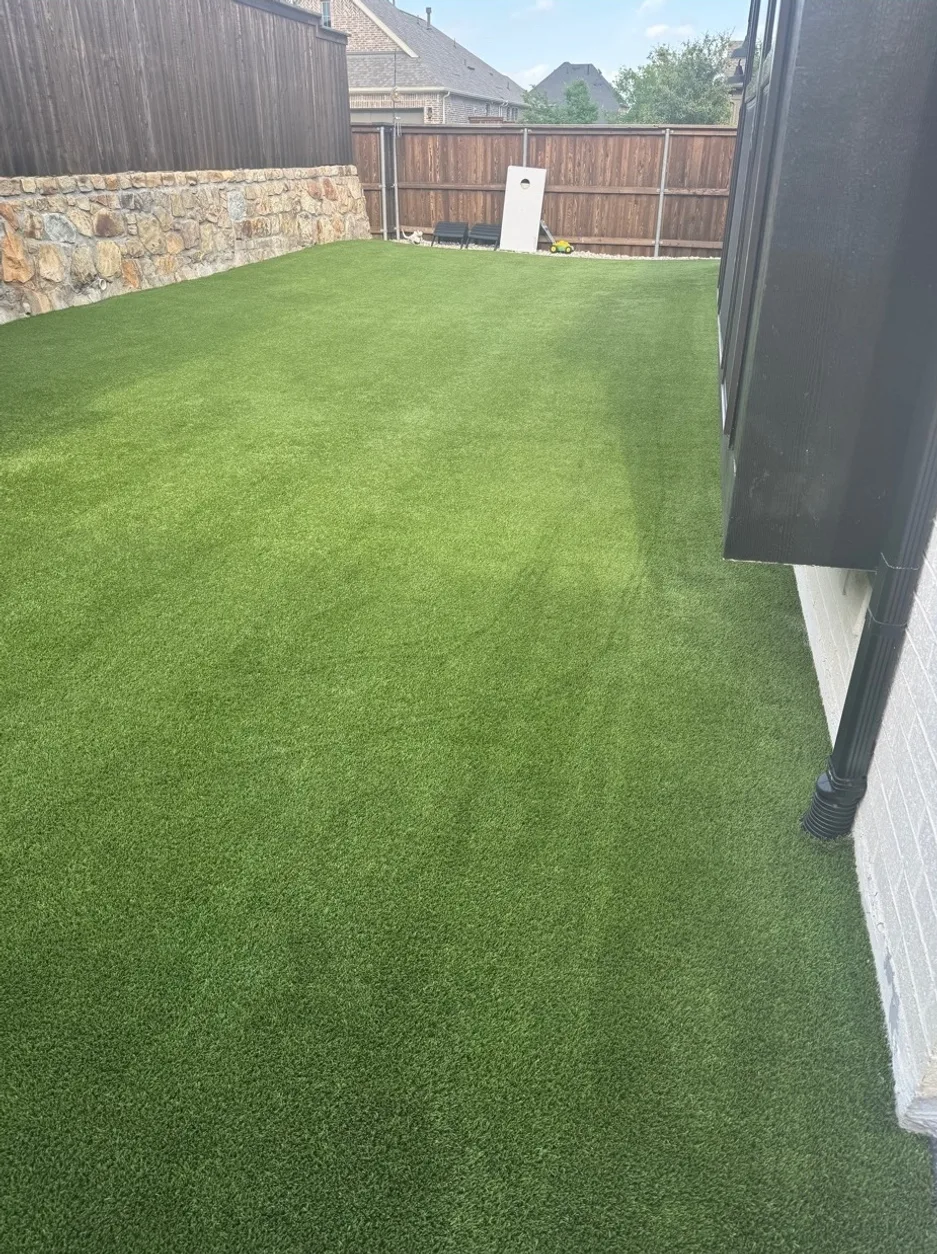
Artificial turf is built to last 15–20 years, but Central Texas tests every one of those years. Reflected sunlight off west-facing windows can melt fibers in a single hot afternoon. Hailstorms tear seams in minutes. Aggressive dogs dig holes through the backing. And after enough heat-cool cycles, even properly installed seams begin to lift along the edges. The good news: most of this damage is repairable — usually for a fraction of the cost of a full replacement.
Tejas Turf Cleaning is a Austin-based, locally owned operation that handles every common form of synthetic turf damage seen in Central Texas yards. We patch burn spots, re-glue lifting seams, replace dog-damaged sections with color-matched donor turf, re-secure pulled edges and nail strips, and fully restore turf that storm debris or hail has shredded. Whether you have a 2-inch melt mark from a low-E window or a 30-square-foot tear from a fallen oak limb, we can almost always avoid a tear-out and reinstall. Get a free repair quote today.
Common Artificial Turf Damage in Austin
Reflected-sunlight burns. Energy-efficient low-E windows on south- and west-facing walls can concentrate enough sunlight to melt synthetic turf in 20–30 minutes — even with the homeowner unaware until they see a brown, glassy patch the next morning. We see this most often in newer Austin builds in Mueller, Steiner Ranch, Circle C, and any subdivision where modern energy-code windows face turf installations directly. Burns range from coin-sized to multi-foot strips depending on window size and sun angle.
Seam lifting and separation. Austin's heat cycle — 100°F afternoons followed by 70°F mornings during summer monsoons — drives expansion and contraction across turf seams. Over 5–10 years, even quality-installed seams can pull apart, exposing the brown backing and creating a tripping hazard. Hill Country installations on uneven grade are especially susceptible.
Pet damage. Diggers, especially terriers, hounds, and high-drive working breeds, can puncture turf backing in minutes. Once the backing is breached, the hole expands rapidly with continued use. This is one of the most common repair calls we get from West Lake Hills, Lakeway, and South Austin households.
Storm and hail damage. Central Texas's spring and fall storm seasons regularly produce hail capable of denting metal — and tearing synthetic turf. Falling limbs from Austin's mature oak canopy cause tears, gouges, and crushed-fiber zones. After every major storm event, we see a wave of repair requests from neighborhoods like Tarrytown, Allandale, and Hyde Park where mature trees overhang turf installations.
Edge and perimeter failure. Nail strips loosen, perimeter board edges lift, and turf edges curl up — typically along driveway transitions, patio borders, and pool decks. This is mostly cosmetic at first but quickly becomes a trip hazard and a debris-collection problem.
UV degradation and color fade. Lower-grade turf installed before manufacturers improved UV inhibitors can fade significantly after 6–8 Austin summers. While we can't reverse fade, we can restore matted, brittle fibers via reblooming and selectively replace the worst-faded zones.
Our Turf Repair Process
We start every repair with an on-site damage assessment. We measure the affected area, photograph it for our records, identify the specific damage type, and check for related issues — a single visible burn often means more sun-concentration zones nearby; one lifted seam usually means the adjacent seams need attention soon. We give you a written quote before any work begins.
Donor turf sourcing is the first technical step for any patch repair. We carry inventory in the most common Austin-area turf styles — Tigerturf, FieldTurf, SYNLawn, Greenfield, and several local installer brands — and can color-match by face weight, blade shape, and pile height. For uncommon turf, we'll either source from the original installer's stock or take a sample from an inconspicuous area of your yard (a hidden corner under a deck, behind plantings) and patch the donor zone with a less-visible match.
Damaged section removal uses precise cuts following the turf's stitch lines so the patch boundary disappears into the existing seam pattern. We remove the failed section completely along with any contaminated infill underneath.
Sub-base preparation. We re-grade and re-compact the decomposed-granite or crushed-stone base under the patch zone, ensuring drainage continuity and a flat surface for the new section.
Patch installation. The replacement section is dropped in, aligned to the surrounding fiber direction, and secured with seam tape and outdoor-grade turf adhesive — the same Tigerturf and SYNLawn-approved adhesives used in original installations. For larger patches we add seam tape under both edges; for smaller cuts we use direct-to-base adhesive with a press-and-weight cure.
Infill restoration. Fresh infill is brushed into the patch zone to match the surrounding depth. We use the same infill type as the existing yard whenever possible — usually silica sand, occasionally zeolite for pet-heavy yards.
Power brushing and blending. Final power brushing lifts the new fibers, blends the patch boundary into the surrounding turf, and matches blade orientation. A well-executed patch on a quality color match should be effectively invisible from 3 feet away.
Cure and inspection. Adhesive cure takes 4–8 hours depending on temperature. We walk the finished work with you, demonstrate the patch's stability, and explain what to avoid for the first 24 hours.
Types of Turf Repair We Handle
Burn-mark patching. Reflected-sunlight burns are typically 2"–24" in diameter. We cut out the melted section, replace with color-matched donor turf, and (when reflection patterns make recurrence likely) recommend window film or shade solutions to prevent the same damage from happening again on the new patch.
Seam re-gluing. For lifted but intact seams, we lift the affected length, clean the old adhesive, lay new seam tape, apply fresh adhesive, and weight the seam during cure. Most seam repairs are 4'–12' long and complete in a single visit.
Pet-damage spot repair. For dog-dug holes ranging from coin-size to dinner-plate-size, we cut a clean square patch boundary, refill the sub-base, drop in donor turf, and finish. For aggressive diggers, we recommend a deterrent strategy alongside the repair — heavy infill weight, citrus deterrents, or behavioral training — to prevent recurrence.
Tear and gouge restoration. Long tears from storm debris or improper installation get patched with rectangular donor sections cut along stitch lines. For very long tears (4'+), we sometimes replace an entire stitch row rather than patching multiple short segments.
Edge re-securing. Lifting edges along driveways, patios, and pool decks get re-nailed with treated lumber or galvanized turf nails into rebuilt nail strips. We replace any rotted perimeter board sections at the same time.
Infill regrade. If your turf has lost significant infill from heavy storm runoff or simply years of compaction, we top up infill across the affected zones, brush it in, and restore proper depth — often pairing with our infill replenishment service.
Full-yard restoration. When damage covers a significant percentage of the yard, we'll quote a restoration combining multiple patches, deep cleaning, infill top-up, and reblooming as a package. Often a 30–40% restoration runs at one-third the cost of a full replacement.
Repair vs. Replace: When Each Makes Sense
Repair makes sense when: the damaged area is less than 30% of total turf, the surrounding turf is in good condition, the existing turf is less than 12 years old, and donor turf is available in a reasonable color match. Most Austin homeowners we visit fall squarely into the repair category — even when the damage looks dramatic.
Replacement is the better answer when: the turf is approaching end-of-life (15+ years), the original turf has been discontinued and no acceptable color match exists, the sub-base itself has failed, or damage covers more than 50% of the yard. In those cases we'll honestly tell you replacement is more cost-effective and can refer you to vetted Austin-area installers.
We never push a replacement when a repair will do. Most of our repair quotes save Austin homeowners thousands of dollars versus what installation companies would charge to tear out and replace.
How Much Does Turf Repair Cost in Austin?
Repair pricing depends on damage type, patch size, and donor turf availability, so every repair is quoted individually after a free assessment. Multi-spot and multi-patch projects get bundled pricing, and larger seam or restoration work is quoted as a flat rate after on-site inspection.
For larger projects, we provide a detailed written quote after on-site inspection. We don't charge for repair assessments within our standard Austin service area.
Frequently Asked Questions About Turf Repair
Will the patch be visible after the repair? On a good color match installed by an experienced technician, the patch boundary effectively disappears within a week as the new fibers blend with the existing turf through routine settling. From standing height, well-done patches are invisible.
How long does a typical repair take? Most single-patch repairs take 1–2 hours on-site. Seam re-gluing of moderate length runs 2–3 hours. Larger restoration projects (multiple patches plus seam work) typically complete in a single 4–6 hour visit.
Can you repair turf installed by another company? Yes — the vast majority of our repair work is on turf we didn't install. We're familiar with all major Central Texas installer products and brands.
What if you can't match my turf exactly? When a perfect match isn't available, we'll discuss your options before starting work. Common alternatives include taking donor turf from a less-visible area of your yard (under a planter, behind an AC unit), using the closest available match in a less-prominent zone, or — for highly visible main-yard damage — sourcing custom-cut material from the manufacturer.
Do you guarantee your repair work? Yes. All seam adhesive work carries a 2-year guarantee against re-lifting. Patches carry a 1-year guarantee against edge separation under normal use. Pet-related damage to repaired areas isn't covered, but we'll always discount the second repair if the same dog re-damages a patch.
How quickly can you schedule a repair? Most repair calls in the Austin area schedule within 5–7 business days. Storm-damage emergencies — large tears, exposed sub-base creating safety hazards — get prioritized within 48 hours when we have technician availability.
Schedule Your Turf Repair Today
Most artificial turf damage in the Austin area is fully repairable for a fraction of replacement cost — and the longer you wait, the more contamination, sub-base damage, and edge expansion can complicate the repair. We serve Austin, Round Rock, Cedar Park, Lakeway, and 26 more Greater Austin and Hill Country communities. Send us photos and a quick description and we'll respond within 24 hours with a preliminary estimate.
Service Overview
Deep cleans start at $339
Includes:
- Seam re-gluing & re-stitching
- Burn & melt patch repair
- Pet-damaged area replacement
- Edge & nail re-securing
- Color-matched fiber blending
Our technicians follow standards set by the Synthetic Turf Council — the industry's leading authority on synthetic turf care.
Turf Repair & Restoration Near You
We serve all of Greater Austin and the Hill Country. Click your city for local pricing and availability.
Travis County · TX
Williamson County · TX
Williamson County · TX
Williamson County · TX
Dedicated repair page for every Greater Austin city we serve.
Other Services You May Need
Most Austin homeowners pair turf repair & restoration with one of these — bundle and save with our recurring plans.
Remove embedded bacteria, pet dander, and Central Texas limestone dust — plus power-brush flattened fibers back to life. Reblooming included in every deep clean.
Neutralize stubborn pet urine odors amplified by the Texas heat with our oxygen-powered treatment process.
Restore displaced infill to maintain proper drainage, cushioning, and fiber support — critical after Central Texas storm seasons.